
Cycling’s Coldest Circles of Hell


On the back of Stephen Williams’ freezing 2024 Flèche Wallonne and a lifetime of watching riders go to places they probably shouldn’t
A couple of years ago, watching Stephen Williams win the 2024 Flèche Wallonne in conditions that looked more like a winter survival drill than a bike race, I found myself thinking again about the strange, almost unspoken contract this sport has with the weather. The Mur de Huy is already a wall that strips riders down to whatever truth they’ve got left, but that day the race felt like it had been dropped into a freezer; sleet and snow hammering into riders’ faces, favourites climbing off with hypothermia, team cars turning into emergency rooms on wheels, and a reduced group of barely forty riders inching their way toward the final ascent as if they were riding into a storm drain rather than a finish line.
Williams talked afterwards about how the race flipped within an hour, how the cold crept into the bunch like a slow poison, and how his years of riding in Welsh filth had quietly prepared him for a day when the rest of the peloton was unravelling. It was the perfect reminder that cycling’s most memorable battles aren’t always fought against rivals or gradients, but against the sky itself, and that some of the sport’s greatest epics have been written in temperatures no sane person would willingly stand in, let alone race through.
So here’s my countdown of the coldest circles of hell this sport has ever produced, told from the roadside, the bus aisle, the snowbanks, and the stories that have become almost folklore inside the peloton.
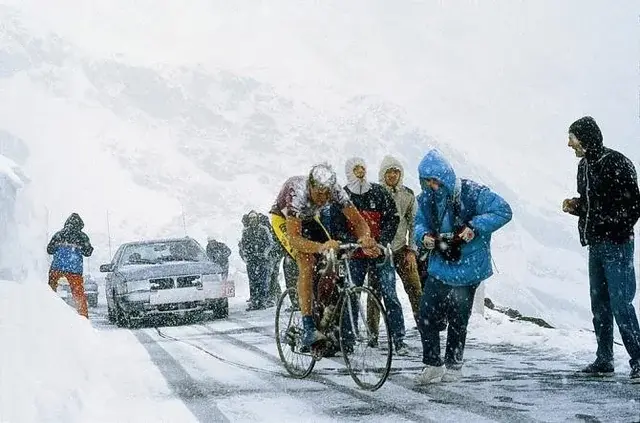
1. Giro d’Italia 1988 – The Gavia Pass and the snow tunnel
If you ask riders of a certain generation about the worst cold they’ve ever seen, the Gavia stage of the 1988 Giro comes up before you even finish the question. The pass is intimidating on a clear day, but that afternoon it turned into something closer to an Arctic expedition; a snowstorm swallowing the road, visibility collapsing, temperatures plunging, and riders climbing into a white void that looked like a narrow trench carved through a glacier.
The stories from that day are almost unbelievable: riders stuffing newspapers and plastic bags under their jerseys, descending with hands so numb they couldn’t feel the brakes, team cars running out of dry clothing, and riders arriving in Bormio in various states of hypothermia, some barely able to stand, others shaking uncontrollably, and more than a few needing immediate medical attention.
The cold didn’t just slow them down; it attacked every system at once. Core temperature dropping, blood flow being redirected to vital organs, fingers losing all fine motor control, and the simple act of shifting gears becoming a negotiation between brain and body that didn’t always succeed. The climb was brutal, but the descent was where the real damage was done, with windchill turning already freezing air into something vicious enough to leave lasting scars.
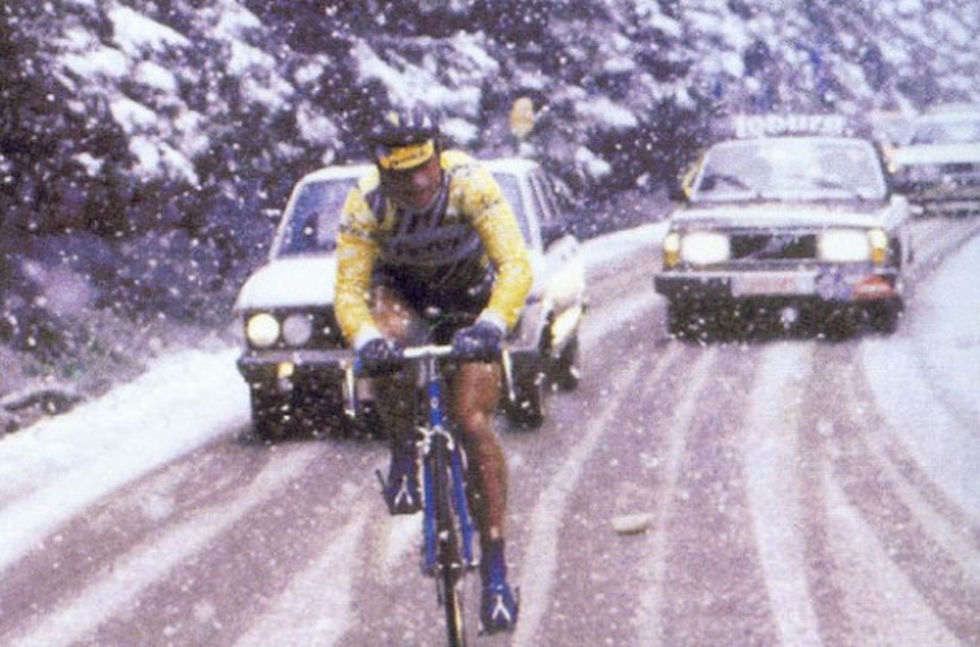
2. Liège–Bastogne–Liège 1980 – Hinault in the blizzard
Then there’s Liège 1980, the original snow horror film. Snow from the gun, temperatures hovering around freezing, and a peloton that slowly disintegrated as the day went on until only a handful of riders were left actually racing and the rest were scattered along the route like casualties. Out of 174 starters, barely twenty finished, and Bernard Hinault didn’t just win, he obliterated the race, riding away alone through the blizzard and finishing almost ten minutes ahead of the next rider.
It’s easy to romanticise it now, to turn it into a tale of the Badger conquering the elements, but the aftermath tells the real story; Hinault suffered permanent nerve damage in his fingers from that day, and even years later he talked about the lingering numbness as a reminder of what he’d put his body through. That’s the thing about these cold epics: they don’t just take something from you in the moment, they leave something behind that never quite fades.

3. Strade Bianche 2018 – Tuscany turns medieval
Strade Bianche is already a race built on discomfort, but in 2018 the heavens opened and turned Tuscany into a mud‑soaked battlefield. Cold rain hammered the peloton from the start, the gravel sectors turned into brown rivers, and riders finished with faces so caked in mud that only their eyes were visible, giving the whole race the look of a Renaissance painting dragged through a storm drain.
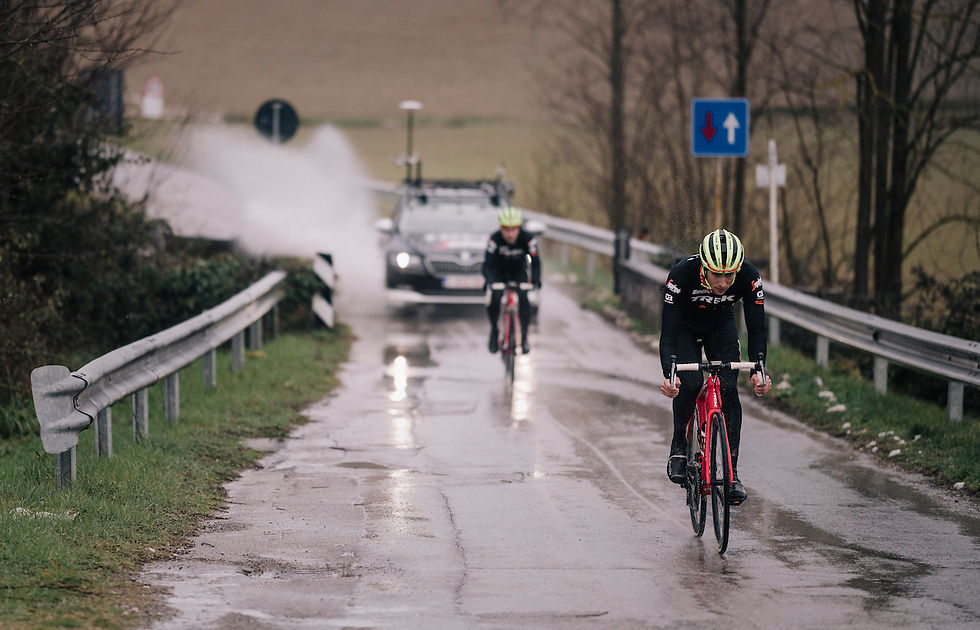
What makes a day like that so brutal isn’t just the temperature, it’s the way the cold and wet combine with the effort; at race speed, soaked clothing becomes a refrigeration system, every descent amplifies the windchill, and the constant shivering quietly burns energy long before the decisive moves are made. By the time the race hit the final climbs into Siena, the group was already heavily reduced, not just by attacks, but by riders who had simply run out of warmth.
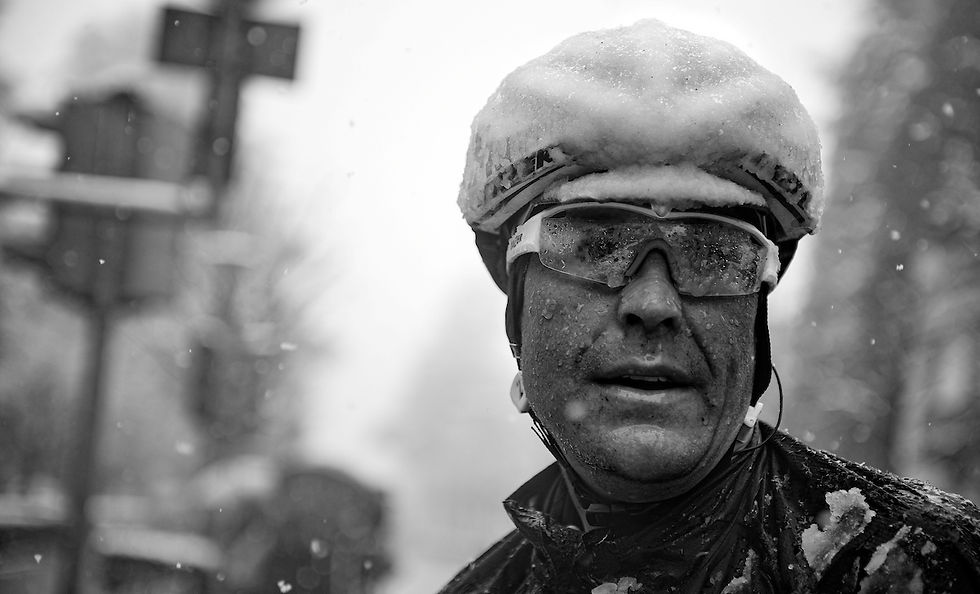
4. Milan–San Remo 2013 – The day La Primavera froze solid
I have skin in this one because I was there, and I can still see it as clearly as if it happened last week. We rolled into Milan with the usual mix of nerves and excitement, talking about underdogs and defending champions, doing the weather test outside the bus, joking about new helmets and childhood stack hats, and trying to work out just how many layers the boys could wear without turning into parachutes.
The rain at the start was already nasty, but as the race headed towards the Turchino it shifted into something else entirely; heavy, wet snow that stuck to everything, visibility dropping, riders’ faces turning a kind of grey you never want to see on an athlete. In the middle of that chaos, Baden Cooke delivered the line that has stayed with me ever since.
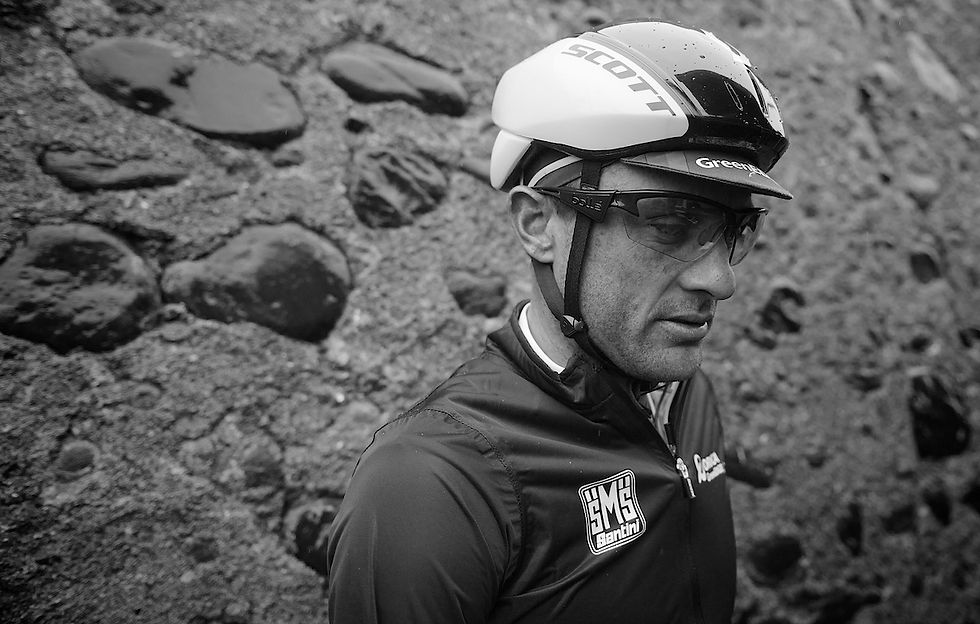
When he finally got onto the bus and peeled off his gloves, he said, “My hands felt like they were going to fall off, my fingernails felt like they were going to drop out.”
It wasn’t bravado. It wasn’t exaggeration. It was a grown man, a hard man, trying to describe a level of cold that had pushed him right to the edge.
By the time the race was neutralised, we were seeing riders from other teams stopping on the side of the road, shaking, barely able to stand, and when the boys climbed into the buses it was like watching people come in from a shipwreck; gloves being peeled off because fingers wouldn’t bend, riders almost in tears while staff rubbed their hands like they were warming up frozen kids.
We joked on camera that it wasn’t Milan–San Remo anymore, it was Geneva–San Remo, because we’d effectively leap‑frogged the snow in the buses and restarted on the other side, but underneath the humour there was a real sense that the line between racing and recklessness had been walked very closely.

5. Flèche Wallonne 2024 – Stephen Williams in the storm
And then we circle back to where this whole reflection began. The 2024 Flèche wasn’t just cold, it was the kind of cold that creeps into the race like a slow‑moving threat, turning the Mur de Huy into a frozen wall and reducing the peloton to a shivering, hollow‑eyed group of survivors. Riders abandoned with hypothermia, team cars ran out of jackets, and the finish line looked less like a celebration and more like a triage zone.
Williams didn’t win that race with a sharp, explosive attack; he won it with a long, desperate surge from a rider who knew he had one effort left and was willing to empty it completely. It was a victory built on resilience, not just strength, and it sits comfortably alongside the great cold‑weather epics because it showed, once again, that cycling’s hardest battles are often fought against the elements rather than the rivals.

What the cold really does to riders?
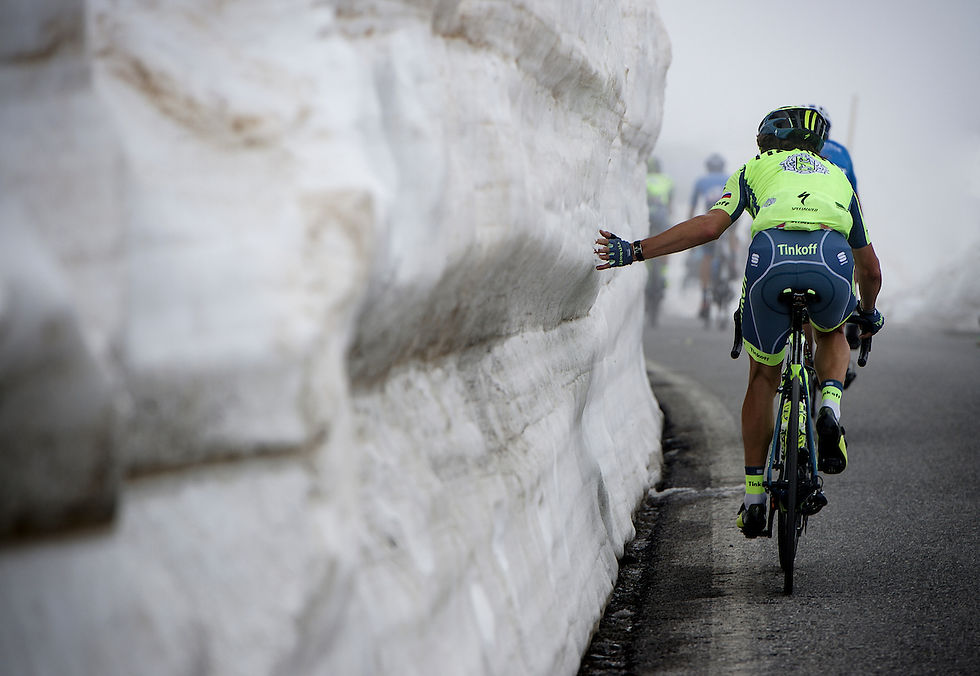
Across all of these days, the pattern is the same: the cold doesn’t just make things uncomfortable, it systematically strips away the layers of control that riders normally rely on. Core temperature drops and with it comes slower decision‑making and a kind of mental fog; hands and feet lose fine motor control, so braking, shifting and eating become clumsy, risky actions; fuelling plans go out the window because no one wants to take their hands off the bars; and underneath it all, the body is quietly diverting resources to keep vital organs functioning, which means less blood flow to muscles just when you’re asking them for race‑winning efforts.
Some riders come away with nerve issues in fingers and toes, others with respiratory problems, others with a kind of mental scar that means they’ll still race in the rain, but they’ll never willingly go as deep again on a day when the temperature is hovering around zero and the snow is coming in sideways.
Why these days matter and how riders fight back now
For fans, these races become legend. For riders, they become reference points. For storytellers like us, they sit in that sweet spot where myth and humanity overlap, where the weather stops being a backdrop and becomes the antagonist, and where the riders, stripped of all the gloss and polish, look less like perfectly tuned athletes and more like stubborn, fragile humans pushing back against a world that has decided to make things very difficult.
The sport has changed though. The cold has not become kinder, but the armour has improved. For a long time riders were improvising their way through the worst days. Hot tea in bidons was standard. Heavy Goretex style jackets were treasured. And on the descents there was the most old school trick of all, grabbing a newspaper from a spectator or the team car and stuffing it down the front of the jersey to block the wind and stop the chest from turning into an ice block. It looked ridiculous, but it worked, and everyone did it.
What is funny is that the trick has never completely died. Riders still reach for whatever they can find when the temperature drops more than expected. There are stories of pros grabbing paper shopping bags from summit cafes and sliding them under their jerseys before dropping into a frozen valley. There was even a recent moment where Julian Alaphilippe used a fan’s cardboard sign as a makeshift chest shield, a modern echo of the same old instinct to find something flat, light and disposable and turn it into armour against the wind. And if you ask around the peloton, plenty will quietly admit that if a newspaper magically appeared at the top of a freezing descent, they would still use it without hesitation.
At the same time the modern peloton has access to cold weather technology that the old hard men could only dream of. Thermal base layers use fabrics that trap heat while still breathing. Lightweight jackets are windproof and water resistant yet pack down to nothing in a pocket. Gloves are designed so that you can still feel the levers while keeping insulation around the fingers. Overshoes and socks are built to keep blood moving to the toes for as long as possible. Teams warm bottles with carbohydrate drink to body temperature so riders can actually drink without freezing their hands, and they pre warm jackets and gloves in the car so that when a rider swaps clothing mid race they are not pulling on something already soaked and cold.
Some teams even boast about having the best cold weather setups in the sport. Ineos Grenadiers have long claimed that their partnership with Castelli gives them the most advanced wet weather kit in the peloton, with the Gabba and Perfetto lines becoming almost mythical among riders for their ability to block wind and shed rain without turning into a sauna. Jumbo Visma, now Visma Lease a Bike, have talked openly about their cold weather protocols and their work with AGU to create race clothing that balances insulation with aerodynamics, especially for northern classics where the weather can turn savage without warning. UAE Team Emirates have invested heavily in winter systems through Pissei, focusing on thermal regulation and moisture management so their climbers do not freeze on long descents. Even smaller teams like EF Education EasyPost have leaned into innovation, working with Rapha to create cold weather layers that are light enough for racing but warm enough for the worst days in Belgium and Italy.
The biggest change is the planning. Teams now have cold weather protocols and clothing plans for different temperature ranges, so it is not just guesswork on the start line. Riders know when they are expected to add layers, when they can strip them, and how to manage the balance between staying warm and not carrying half a wardrobe up every climb. The newspapers are not gone completely, but they are now a last resort rather than the first line of defence.
The suffering though remains exactly the same. No matter how good the gear gets, there is still a point where the cold gets inside you, where your fingers stop listening, where your brain slows down, where the world narrows to the few metres of road in front of you and the simple, stubborn decision to keep going. Hell in cycling does not always come with flames. Sometimes it comes with snow, sleet, sideways rain and a finish line you cannot feel yourself crossing. And even with all the modern tech, those are still the days that stay with you long after the results sheet has been filed away.
Let us know the epic days we missed in the comments below.


Comments