
The Quiet Crisis in Pro Cycling – Why Burnout Is Ending Careers Early
- Dan Jones

- Feb 12
- 5 min read
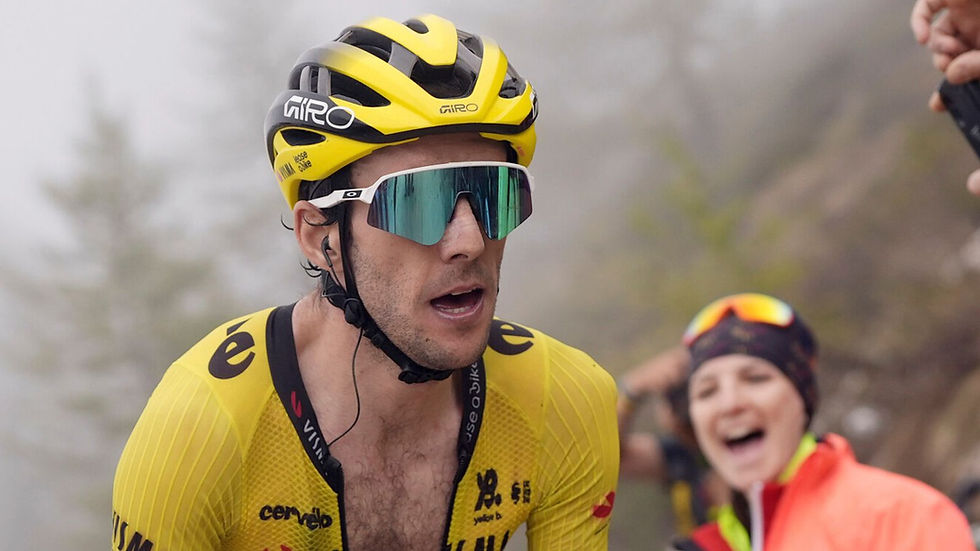
There’s a conversation happening quietly in the corners of the peloton, in hotel hallways, in team buses, and in the minds of riders who don’t want to say it out loud yet: burnout is becoming one of the biggest dangers in modern cycling.
Not crashes. Not injuries. Not contracts. Burnout.
And the signs are everywhere if you know where to look.
The moment that really hit me — the one that made me stop and think, hang on, something’s shifting here — was Simon Yates announcing his retirement. This wasn’t a rider fading out. This wasn’t someone hanging on for a contract. This was a bloke who won the Giro d’Italia in 2025, was still at the top of his game, still capable of winning Grand Tours… and then suddenly said, “I’m done.”
It shocked me. And it made me wonder: is this the first of many?
The Modern Rider Lives in a Pressure Cooker
Cycling has always been hard. But the modern version of the sport is something else entirely.
Riders now:
weigh every gram of food
track every calorie
drink scientifically measured carbohydrate mixes on the bike
monitor sleep, HRV, glucose, hydration
spend 120+ days a year on the road
race in a peloton that’s faster and more explosive than ever
live under constant scrutiny from fans, teams, media, and social platforms
It’s not just a job anymore — it’s a lifestyle that never switches off.
I’ve seen it up close. Riders sitting at dinner with scales next to their plates. Riders calculating carb intake like accountants. Riders who haven’t had a proper off‑season in years because the calendar never stops expanding.
And if you’ve got a young family? Good luck. At some point you’re going to look at your kids and think, What am I doing?
The Team Sky Era: When Winning Became Relief, Not Joy
I used to chat with Richie Porte back when he was riding with Team Sky — the most dominant, most controlled, most high‑pressure environment the sport had ever seen. And what he told me has stuck with me ever since.
When they won the Tour de France — the biggest race in the world — it wasn’t jubilation. It wasn’t celebration. It wasn’t champagne and dancing on tables.
It was relief.
Relief that the job was done. Relief that the pressure was over. Relief that the months of sacrifice hadn’t been wasted.
Sky would send riders to training camps in Mallorca where they’d spend a month in isolation. No internet. No phone reception. No contact with the outside world. Just training, eating, sleeping, and repeating.
That’s not a training camp. That’s a prison camp with better views.
And all for what? To arrive in Paris relieved — not happy, not fulfilled — relieved that the suffering was justified.
A lot of athletes say their biggest regret is that they didn’t celebrate their wins enough. They were always in beast mode. Always focused on the next goal. Always wanting more. And yes, you need that edge to be elite — but at what cost if you never actually enjoy the success?
Simon Yates: The Retirement That Should Make the Sport Pay Attention
Simon Yates walking away is a flashing red light for the sport.
Here’s a rider who:
won the Giro in 2025
was still physically elite
still had the engine, the experience, the race craft
still had years left if he wanted them
And yet he stepped away.
Why?
There’s the obvious: the grind, the pressure, the endless travel, the mental load.
But there’s also the team politics that no one outside the sport really sees.
When you win a Grand Tour, you expect — and deserve — full team support the next time you line up for one. But cycling isn’t that simple. Teams have budgets, egos, agendas, sponsors, internal hierarchies. You can be a Giro winner and still find yourself fighting for leadership because the team has another rider they want to push, or a new signing they need to justify, or a “super domestique” who, in another environment, could be a leader themselves.
That’s the irony: On a smaller team, you might get leadership but not the support. On a bigger team, you get the support but not always the leadership.
And that wears you down. Year after year. Conversation after conversation. Expectation after expectation.
At some point, even champions think, Why am I still doing this?
The Money Has Changed the Equation
Here’s the part no one really talks about.
WorldTour salaries have skyrocketed over the past 20 years. A top rider in the early 2000s might have been on €150k–€200k. Today? Young riders in their early 20s are signing deals worth seven figures before they’ve even done a Grand Tour.
It’s life‑changing money. Generational money. Money that sets up families.
And when you’re financially secure by 28 or 30, the question becomes:
Why keep suffering?
Why keep starving yourself? Why keep living out of a suitcase? Why keep missing birthdays, weddings, milestones? Why keep pushing your body to the edge for another season of stress?
If you don’t need the wage anymore, the motivation has to come from somewhere deeper — and not everyone has that fire forever.
The Youth Pipeline: A Blessing and a Curse
Teams are signing riders younger than ever. Eighteen‑year‑olds. Nineteen‑year‑olds. Kids who haven’t even lived out of home yet suddenly earning more than their parents.
They’re thrown into the WorldTour with huge expectations and huge salaries. And some of them thrive. But others? They hit 30 and feel like they’ve already lived three careers.
If you’ve been a pro since you were 18, by the time you’re 30 you’ve:
raced 800+ days
travelled the world dozens of times
lived out of hotels for over a thousand nights
been under pressure every single season
No wonder some of them say, “You know what? I’m done.”
Is This a Cycling Problem — or a Global Sports Problem?
It’s both.
Burnout is hitting athletes everywhere:
tennis players retiring in their mid‑20s
gymnasts stepping away early
footballers taking mental health breaks
swimmers quitting after one Olympic cycle
But cycling has a unique cocktail:
extreme travel
extreme diet control
extreme training loads
extreme pressure
extreme longevity of the season
extreme isolation
It’s a sport built on suffering — and suffering has a shelf life.
Where Does the Sport Go From Here?
Cycling needs to start talking about this openly. Not in whispers. Not in euphemisms. Not in “he’s taking a break for personal reasons.”
Burnout is real. It’s growing. And it’s ending careers early.
Teams need to rethink:
workload
travel schedules
family support
mental health resources
off‑season length
expectations for young riders
leadership clarity after major wins
Because if the sport keeps accelerating without building in recovery, we’re going to see more riders walking away at 28, 29, 30 — not because they can’t compete, but because they don’t want to live like this anymore.
And honestly? Who could blame them.


WHAT A RIPPER